
Parker County TX Real Estate Forecast 2026
Parker County Real Estate, Texas Housing Market, Real Estate Forecast
Parker County, TX Real Estate Market Forecast for 2026: What Buyers and Sellers Should Expect
The Parker County, TX real estate market in 2026 is shifting from the breakneck pace of the pandemic era into a more measured, sustainable rhythm. With prices hovering in the mid‑$400,000s and inventory normalizing, both buyers and sellers have new opportunities—and new challenges—to navigate. This Parker County real estate forecast breaks down the numbers, puts them in the context of the wider Texas housing market, and highlights the property trends Texas buyers, sellers, and investors should watch through the rest of the year.
Snapshot of the Parker County Real Estate Market in Mid‑2026
To understand the Parker County, TX real estate market forecast for 2026, it helps to start with where things stand today. Most recent data puts typical Parker County homes in the $460,000–$480,000 range, depending on the source and time frame:
Zillow’s Home Value Index estimates the average home value at about $444,681, down a modest 0.7% year‑over‑year as of May 31, 2026 (Zillow).
Redfin reports a median sale price of roughly $476,022, about 2.9% lower than a year earlier (Redfin).
Property Focus shows a median sale price around $462,733 and a typical value near $443,000 as of June 2026 (Property Focus).
Different platforms use different time windows and property mixes, so their numbers vary slightly. But taken together, they paint a clear picture: the Parker County real estate market has cooled from its peak and is now largely stabilizing rather than surging or crashing. For anyone tracking Parker County homes, that shift from volatility to balance is one of the defining property trends Texas observers are watching in 2026.
Is Parker County in a Buyer’s or Seller’s Market?
One of the most important questions in any real estate forecast is who holds the advantage: buyers or sellers. In Parker County, the answer is increasingly, “it depends on the neighborhood and price point”—but overall, conditions are leaning toward a balanced to slightly buyer‑friendly market.
Realtor.com categorizes Parker County as a buyer’s market as of May 2026, with about 2,923 active listings and a median listing price of $536,125, down 2.43% year‑over‑year (Realtor.com).
Homes are taking around 50–60 days to sell on average, depending on the data source—longer than during the frenzy of 2021–2022, but still brisk by pre‑pandemic standards (Redfin, NTREIS, Realtor.com).
Months of inventory range from roughly 5 to nearly 10 months depending on the dataset and time frame (Orchard, NTREIS), a clear sign that buyers have more options and time to make decisions.
At the same time, Parker County homes are still commanding strong prices relative to list. Redfin reports a sale‑to‑list price ratio around 98–99%, and NTREIS notes homes selling at about 95.8% of original list price. That suggests steady underlying demand: buyers may have more leverage than they did a year or two ago, but well‑priced properties are not lingering or selling at fire‑sale discounts.
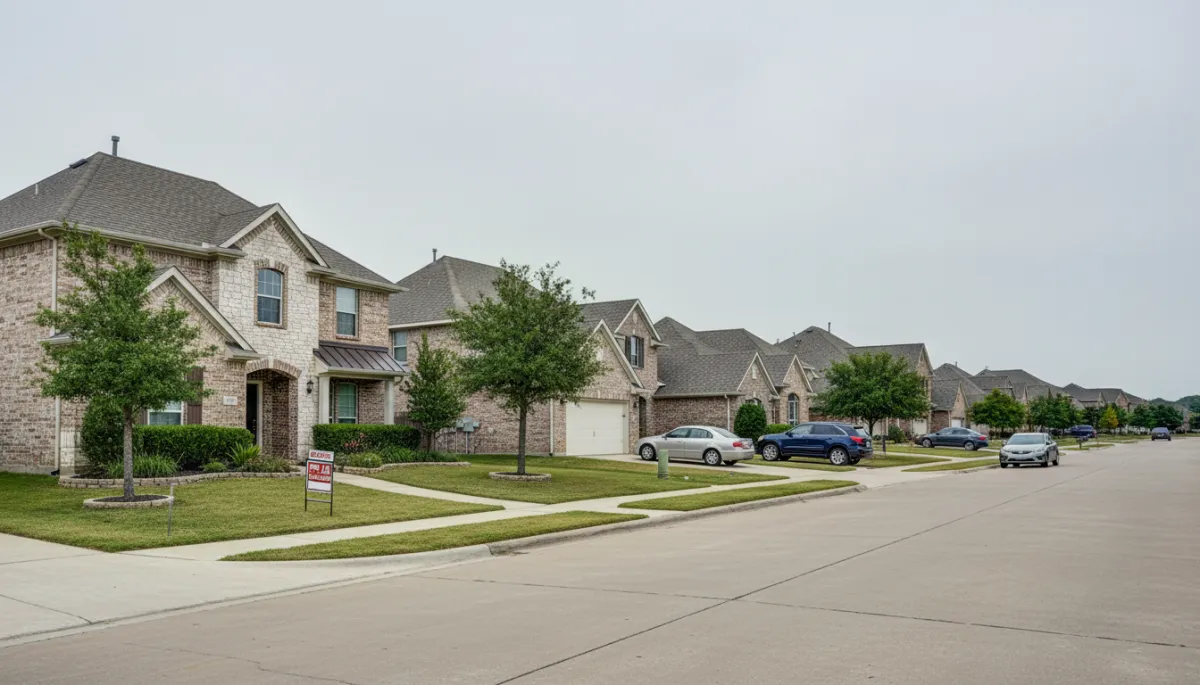
More inventory and steady demand are creating a healthier, more negotiable market.
How Parker County Fits into the 2026 Texas Housing Market
Zooming out, the broader Texas housing market in 2026 is also moving toward balance. Statewide, prices have softened slightly after years of rapid appreciation. Zillow estimates the average Texas home value around $302,550, down about 1.9% year‑over‑year as of May 2026, while Realtor.com shows a median listing price of $359,000, down nearly 3% (Zillow, Realtor.com). Inventory has expanded significantly, with months of supply in some markets stretching into the high single digits (ManageCasa).
Against that backdrop, Parker County stands out as a relatively resilient suburban market. Median sale prices here remain well above the statewide average, reflecting its appeal as a high‑growth area west of Fort Worth. The Texas Real Estate Research Center (TRERC) expects statewide sales to rise about 2.5% and median prices to tick up around 1.3% by the end of 2026, assuming mortgage rates ease somewhat. Parker County is likely to follow a similar path—modest growth rather than dramatic swings—supported by population growth, strong local incomes, and ongoing in‑migration from more expensive metros.
Key Drivers Shaping the 2026 Parker County Real Estate Forecast
1. Population and Job Growth
Parker County is consistently ranked among the fastest‑growing counties in the nation, a trend that underpins long‑term demand for housing. As more people seek space, schools, and suburban amenities within commuting distance of Fort Worth, Parker County homes remain on many buyers’ shortlists. This demographic momentum is a major reason the local market is stabilizing rather than slumping, even as the wider Texas housing market adjusts to higher interest rates.
2. The Upcoming UTA West Campus Near Aledo
Another important factor in the Parker County real estate forecast is the planned University of Texas at Arlington West campus near Aledo, slated to open in 2028. While still a couple of years away, large educational projects often influence real estate markets well before doors open. Faculty, staff, and associated businesses begin planning early, investors anticipate rental demand, and infrastructure improvements follow. For Parker County, especially the Aledo area, this development should support steady appreciation and increased interest in nearby Parker County homes throughout the latter half of the decade.
3. Mortgage Rates, Taxes, and Affordability
Mortgage rates remain elevated near the mid‑6% range, higher than many forecasts anticipated. That has cooled some buyer enthusiasm, especially at higher price points, and is one reason inventory has climbed. At the same time, Parker County’s effective property tax rate of about 1.45% is slightly below the Texas average, offering a small but meaningful affordability edge over some neighboring counties (PropertyTaxRates.org). Conforming and FHA loan limits—around $832,750 and $563,500, respectively—comfortably cover most Parker County homes, giving buyers flexibility in financing.
Price and Inventory Outlook: What to Expect Through Late 2026
Pulling together local and statewide data, the most likely scenario for the Parker County, TX real estate market through the end of 2026 is one of modest, measured growth rather than boom‑or‑bust moves. Here is how the forecast shapes up across key metrics:
Median Home Prices: Expect a 1–3% increase in median sale prices by year‑end, roughly in line with TRERC’s statewide projection. Median prices should remain anchored near the mid‑$400,000s, with premium pockets like Aledo and newer master‑planned communities potentially outperforming the county average.
Inventory and Months of Supply: Inventory is likely to stay elevated but stable. Months of supply in the 5–7 range would point to a genuinely balanced market, giving buyers options without overwhelming sellers with competition.
Sales Volume: With closed sales already up in several recent reports (GFWAR and NTREIS both show mid‑single‑digit gains), a 2–5% increase in total 2026 sales versus 2025 looks realistic, assuming rates don’t spike higher.
Days on Market: The typical Parker County home should continue to sell in roughly 50–70 days, depending on price point and condition—long enough for thoughtful decision‑making, but short enough to signal healthy demand.
What This Means for Buyers, Sellers, and Investors in Parker County
For Buyers
If you have been watching Parker County homes from the sidelines, 2026 offers a more forgiving environment than the bidding wars of recent years. Increased inventory and longer days on market mean:
More choice across neighborhoods, from Weatherford and Willow Park to Aledo and rural acreage.
Greater room to negotiate on price, closing costs, or concessions—especially on homes that have sat for several weeks.
A lower risk of overpaying at the very top of the market, thanks to more transparent pricing and fewer bidding frenzies.
For Sellers
Sellers still benefit from solid demand and a strong long‑term story for Parker County real estate, but strategy matters more than ever. In a balanced market, success often comes down to:
Pricing realistically based on recent comparable sales, not just aspirational numbers from the peak years.
Investing in presentation—professional photography, minor repairs, and thoughtful staging can help your home stand out in a more competitive field.
Remaining open to concessions or rate buydowns that can help buyers manage higher mortgage costs while preserving your net proceeds.
For Investors and Long‑Term Planners
For investors focused on Parker County real estate, 2026 looks like a year to focus on selective, fundamentals‑driven acquisitions. Rents have softened somewhat—Realtor.com notes median rent around $1,848, down nearly 16% year‑over‑year—but TRERC projects statewide single‑family rents to trend back toward the $2,200 range by the end of the year. Combined with population growth and the coming UTA campus, that makes well‑located Parker County homes attractive for buy‑and‑hold strategies, especially if purchased at realistic prices in today’s more balanced market.
Final Takeaways: A Stable, Opportunity‑Rich Market in 2026
The 2026 Parker County, TX real estate market forecast points to stability, balance, and steady demand. Prices are no longer racing upward, but they are holding firm in the mid‑$400,000s, with a realistic chance of modest appreciation by year‑end. Inventory has expanded enough to give buyers breathing room, yet not so much that it signals distress. In short, Parker County is evolving into the kind of healthy, sustainable market that many in the wider Texas housing market are hoping to see.
For buyers, that means more options and better negotiating power. For sellers, it underscores the value of pricing and presentation. And for investors, it highlights Parker County real estate as a long‑term play backed by population growth, infrastructure investment, and the enduring appeal of Texas suburban living. As property trends Texas‑wide continue to normalize, Parker County stands out as a market where thoughtful decisions—not speculation—are most likely to be rewarded in 2026 and beyond.